Choosing reliable Cell Rubber Fender suppliers is a practical challenge for port authorities, shipyards, marine contractors, and global buyers. Supplier lists can look impressive, yet product quality varies behind polished websites. A trusted supplier should provide verified rubber compounds, accurate dimensions, tested energy absorption, and clear compression data. Details matter.
This guide examines the 2026 supplier landscape through practical procurement criteria. It considers manufacturing experience, inspection procedures, technical support, export capability, and after-sales communication. Buyers should review drawings, material certificates, load-deflection curves, and installation guidance before placing an order. A supplier’s ability to produce consistent fenders matters more than a single attractive quotation. Poorly controlled rubber may crack under ultraviolet exposure, saltwater, repeated impact, or temperature changes. That risk can damage both the quay structure and the vessel.
The best supplier is not always the largest company. Fit matters. A regional manufacturer may offer faster technical support, while an established exporter may provide broader documentation and logistics experience. Buyers should compare certification claims carefully and request recent project references when possible. Factory audits, sample testing, and independent inspection can reveal weaknesses that brochures do not show. However, no supplier can remove every project risk. Specifications may still be incomplete, and delivery estimates can change. This article therefore offers a balanced framework rather than an unquestionable ranking. It helps global buyers ask better questions, identify dependable partners, and select fenders suited to actual berthing conditions. Real performance begins with accurate engineering, honest communication, and disciplined quality control.
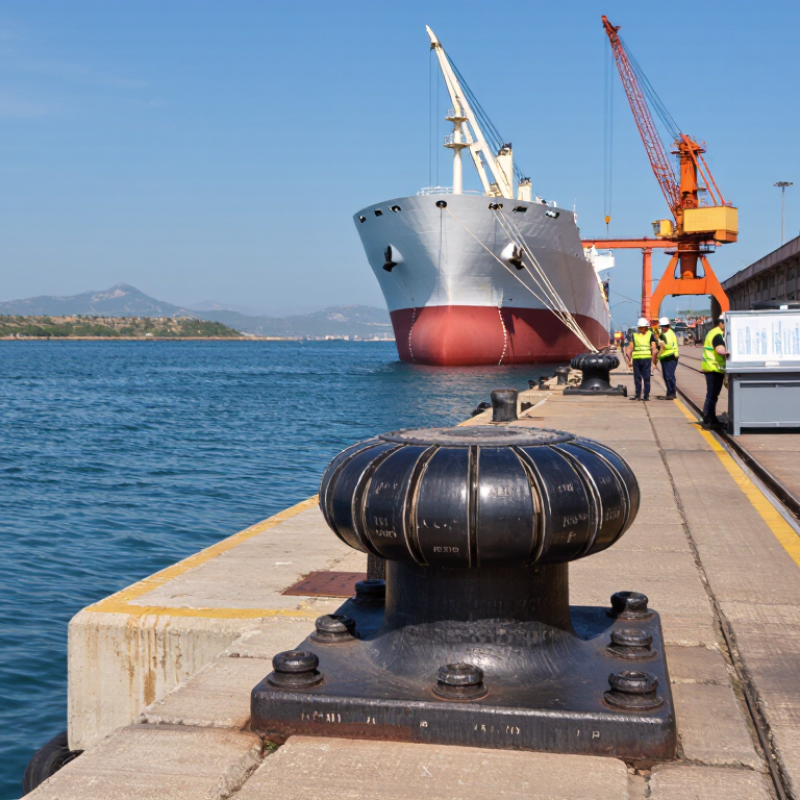
Cell rubber fenders are molded marine cushions used between a vessel and a quay wall. Their hollow, cylindrical body contains no foam or internal pressure. When a ship presses against the fender, the rubber wall compresses and bulges outward. This deformation converts impact energy into controlled reaction force.
PIANC Report WG33 identifies energy absorption and reaction force as primary fender-selection values. Standard design practice often evaluates cell fenders near 50% compression, although the exact rating depends on temperature, speed, contact angle, and rubber condition. A 2.0-meter fender may look oversized, yet a large vessel moving slowly can still create substantial berthing energy. Contact is brief. The rubber must respond immediately.
UNCTAD’s Review of Maritime Transport 2024 states that ships carry over 80% of global merchandise trade by volume. That scale makes reliable berthing protection essential. Engineers normally calculate vessel displacement, approach velocity, added water mass, and berth geometry before selecting a cell fender. They also check panel pressure, anchor loads, and clearance above the waterline.
Field performance can differ from drawings. Dirt, ultraviolet exposure, uneven compression, and aging may reduce effective resilience. A neat calculation is not enough. Inspectors should measure cracks, bulging, permanent deformation, and bolt condition during scheduled maintenance. Installation errors are easy to underestimate. The fender may still appear usable while its energy performance has already changed.
Cell rubber fenders are hollow cylindrical marine fenders that absorb berthing energy through controlled elastic compression. The chart shows a normalized engineering profile: reaction force generally rises with compression, while absorbed-energy capacity increases cumulatively. Actual performance depends on fender geometry, rubber compound, temperature, speed, and loading angle.
Values are normalized percentages for technical explanation rather than supplier-specific product ratings. Final selection should use certified manufacturer performance curves and project design conditions.
Comparing cell rubber fender suppliers starts with measurable performance, not attractive brochures. Ask for rated energy absorption, reaction force, compression limits, and allowable tolerance. These figures should match the intended berth design and vessel contact conditions.
Request dimensional drawings, rubber compound data, and steel flange details. Shore hardness, tensile strength, elongation, ozone resistance, and temperature range reveal material quality. A reliable supplier provides batch traceability and recent laboratory test reports. Check whether tests follow recognized maritime or industrial standards. Standards can differ, so unclear references deserve careful questioning.
Field experience also matters. Inspect how the supplier controls molding temperature, bonding, surface finish, and flange alignment. Small defects may become serious under repeated vessel impact. Ask for inspection photos, packing methods, installation guidance, and replacement support. Delivery history should include realistic lead times, not only promised dates. Samples help, but one sample cannot represent every production batch. I learned this the hard way.
Compare warranty terms with actual evidence. A long warranty means little without documented quality controls and clear exclusions. Review corrosion protection for bolts, washers, and embedded steel parts, especially near seawater. Confirm whether the supplier can provide custom dimensions without weakening the rubber body. Technical communication is another practical test. Precise answers usually indicate stronger engineering control. Vague answers are a warning. Mistakes can still happen, so keep an independent inspection step before shipment.
2026 Best Cell Rubber Fender Suppliers for Global Buyers
Top Regions and Supplier Types in the 2026 Global Market
In 2026, global buyers are comparing cell rubber fender suppliers by region, evidence, and service depth. East Asia remains strong in high-volume manufacturing and cost control. European suppliers often provide detailed engineering support and strict testing records. Middle Eastern and South Asian suppliers are gaining attention for port expansion projects. Local distributors can shorten delivery times, but their technical support may vary.
Supplier type matters as much as location. Direct manufacturers usually offer better customization and production visibility. Marine engineering firms can help with berthing calculations, drawings, and installation planning. Regional distributors may provide faster spare parts and site assistance. Buyers should request compression data, material specifications, inspection procedures, and recent project references. From practical sourcing experience, incomplete drawings often create avoidable delays. A low price can become expensive after redesigns, shipping changes, or installation problems.
Tips: Compare at least three qualified suppliers. Check testing records independently. Confirm the fender’s energy absorption and reaction force under actual operating conditions. Ask how the supplier handles dimensional deviations and replacement claims. Do not judge quality from appearance alone. Some suppliers communicate confidently, yet their documentation remains thin. That gap deserves careful review.
| Region | Common Supplier Type | Typical Product Scope | Typical Buyer Applications | Relevant Technical Requirements | Recommended Buyer Verification |
|---|---|---|---|---|---|
| East Asia | Large rubber-product manufacturers and marine-fender exporters | Cell fenders, sliding panels, frontal frames, chains, brackets, and complete berth protection systems | Commercial ports, shipyards, dry bulk terminals, container berths, and offshore support facilities | Performance data should include reaction force, energy absorption, allowable compression, shear limits, and dimensional tolerances | Request product drawings, compound information, test reports, inspection records, and installation references for comparable marine loads |
| South Asia | Marine-rubber fabricators, engineering contractors, and project-oriented OEM suppliers | Standard and custom cell fenders, molded rubber components, steel fixtures, and replacement assemblies | Port expansion projects, ship berths, coastal infrastructure, and industrial jetties | Rubber hardness, tensile strength, elongation, aging resistance, bonding quality, and design reaction curves should be documented | Check whether the supplier can provide engineering calculations, dimensional inspection, and third-party or witnessed testing |
| Southeast Asia | Regional marine-equipment distributors, installers, and rubber-fender system integrators | Cell fenders with front panels, UHMW-PE facing materials, chains, anchors, and installation services | Tropical ports, ferry terminals, ship-repair facilities, and river or coastal berths | Design should consider high humidity, saltwater exposure, ultraviolet exposure, vessel approach velocity, and berthing angle | Confirm corrosion protection for steelwork, drainage provisions, replacement-part availability, and local installation capability |
| Europe | Marine-engineering firms, specification-led manufacturers, and port-equipment contractors | Engineered fender systems, replacement cell units, custom frontal frames, and project documentation | Ro-ro terminals, naval facilities, cargo ports, passenger terminals, and offshore logistics bases | Design documentation should address berthing energy, vessel hull pressure, structural loads, service life, and maintainability | Ask for calculation notes, quality plans, traceability documents, material declarations, and compliance with the project specification |
| Middle East | Port-project contractors, marine-equipment distributors, and heavy-duty system suppliers | Heavy-duty cell fenders, large frontal systems, sliding assemblies, and complete berth packages | Deep-water ports, energy terminals, shipyards, bulk cargo facilities, and offshore bases | The design should account for high ambient temperatures, intense solar exposure, saline conditions, large vessel displacement, and high berthing energy | Verify rubber aging data, coating systems, steel grade, anchor design, heat resistance, and availability of commissioning support |
| North America | Port-engineering suppliers, industrial rubber manufacturers, and authorized project distributors | Cell fenders, replacement units, marine piles, steel frontal systems, and retrofit components | Bulk terminals, naval and government facilities, ferry docks, cruise terminals, and industrial waterfronts | Specifications commonly emphasize engineering calculations, inspection procedures, workplace safety, corrosion control, and project documentation | Confirm local code requirements, purchaser inspection requirements, product liability coverage, delivery terms, and spare-unit support |
| Latin America | Import distributors, port-maintenance contractors, and regional marine-fender integrators | Standard replacement cell fenders, berth repair packages, chains, brackets, and installation services | Bulk ports, fishing harbors, container terminals, ferry infrastructure, and industrial docks | Product selection should reflect local vessel size, tidal range, berth geometry, corrosion conditions, and maintenance access | Evaluate import documentation, spare-part lead times, installation capability, customs requirements, and after-sales response |
| Africa | International marine suppliers, infrastructure contractors, and port-maintenance service providers | Cell fender assemblies, rehabilitation systems, heavy-duty berth protection, and replacement hardware | Multipurpose ports, mineral-export terminals, fishing ports, naval facilities, and coastal infrastructure | Robustness, ease of inspection, corrosion resistance, transportability, and long-term availability of replacement parts are important | Check packing dimensions, lifting arrangements, site support, installation method statements, and maintenance training |
| Supplier Classification | Best Fit for Global Buyers | Main Strength | Main Risk to Check | Minimum Documentation to Request |
|---|---|---|---|---|
| Manufacturer | New-build ports and large-volume replacement programs | Direct control over rubber compound, molding, dimensions, and testing | Inconsistent quality between production batches or limited engineering support | Technical datasheet, drawing, inspection plan, test report, material certificate, and warranty terms |
| Marine-System Integrator | Projects requiring design, steelwork, installation, and commissioning | Single-point coordination for the complete fender system | Higher project complexity and possible dependence on subcontractors | Design basis, load calculations, installation method statement, inspection plan, and as-built drawings |
| Distributor | Urgent replacement, small quantities, and local maintenance work | Local stock, quicker communication, and regional logistics | Unclear manufacturing origin or incomplete performance data | Original technical data, batch identification, dimensional report, delivery condition, and traceability records |
| Engineering Consultant | Independent specification, system review, and supplier evaluation | Neutral comparison of berthing energy, reaction force, hull pressure, and structure | Consultancy scope may not include product manufacturing or installation | Design criteria, vessel data, environmental loads, fender calculations, and review deliverables |
When evaluating cell rubber fender suppliers in 2026, begin with product evidence, not attractive brochures. Ask for compression, tensile, aging, and saltwater resistance test reports. Each report should identify the compound, batch number, test date, and laboratory. Check whether the results match the proposed fender size.
Certifications deserve careful review. A valid quality management certificate can indicate controlled production, but it does not prove every fender is reliable. Confirm the certificate scope, issuing body, and expiration date. For marine projects, request applicable inspection records or approvals from recognized classification organizations. A supplier should also explain its rubber formulation and quality checks. Small details matter, such as surface cracks, uneven cell walls, or poor flange bonding.
Manufacturing capacity is more than monthly output. Visit the factory, if possible. Observe mixing equipment, mold storage, curing presses, and final inspection areas. Ask how many molds are available for your dimensions. Review recent production records, staffing, maintenance schedules, and realistic lead times. A supplier may promise 500 units, yet lack curing capacity during peak months. That gap can delay installation.
Do not choose on price alone.
I would compare three recent batches, not one sample. Samples can be unusually careful. Also, certification documents may look complete while traceability remains weak. The best supplier provides clear answers, admits limitations, and offers measurable corrective actions when defects appear.
Ordering cell rubber fenders requires more than comparing unit prices. Share the vessel size, berthing speed, water level, panel dimensions, and expected contact angle. A qualified supplier should provide energy absorption, reaction force, material grade, and dimensional tolerances. Request recent test records and engineering drawings before approving production. Small drawing errors can create expensive installation problems.
Customization should match the berth, not merely the buyer’s preference. Suppliers may adjust rubber hardness, flange holes, steel plates, sliding faces, and painted components. Ask how each change affects performance and service life. Sample approval is valuable. Still, one sample cannot represent every production batch. This is an area buyers sometimes underestimate.
Shipping plans need equal attention. Confirm packing dimensions, lifting points, container loading, moisture protection, and delivery documents. Rubber should avoid prolonged heat and direct sunlight during storage. On arrival, inspect cracks, deformation, missing bolts, and coating damage. Photograph each package before opening. Keep the inspection record.
After-sales support should include installation guidance, replacement-part availability, warranty scope, and a clear response time. Ask whether technical staff can review site photographs or installation measurements. Practical support matters when a fender arrives slightly misaligned. It happens. A dependable supplier accepts technical questions after payment, not only before it. Clear communication, traceable documents, and honest limitations are stronger reliability signals than polished promises.