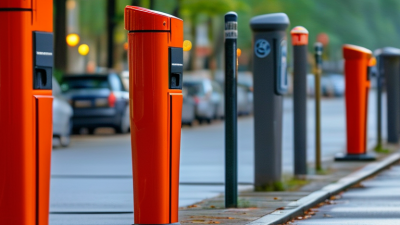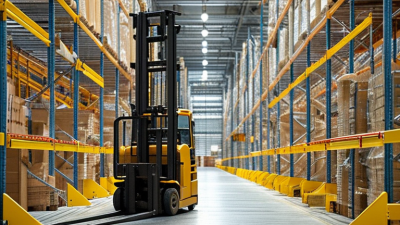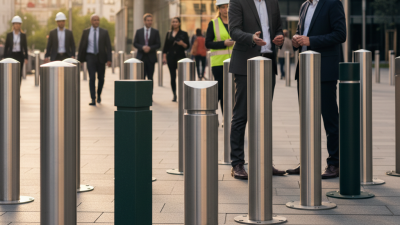
Warehouse safety is changing as facilities handle faster traffic, taller racks, and heavier automated equipment. In this environment, Warehouse Bollards provide a visible and physical barrier around vulnerable assets. They can protect racking uprights, dock doors, pedestrian routes, charging stations, and control panels from vehicle impact.
The best 2026 options should match the warehouse’s actual risks, not merely offer impressive impact ratings. A steel bollard may suit a busy loading bay, while a flexible polymer model could work better near pedestrian aisles. Fixed, removable, and collapsible designs each solve different access problems. Installation quality matters just as much. A strong post with weak anchors is not a reliable safety system.
Small details deserve attention. Measure turning radiuses. Check floor depth. Observe forklift paths during peak shifts. Ask operators where near-misses happen, because drawings rarely show the whole story. Bright yellow finishes improve visibility, but lighting, cleanliness, and floor markings also influence performance. Color alone is not protection.
This guide compares practical Warehouse Bollards for warehouse safety in 2026. It considers impact resistance, materials, anchoring, visibility, maintenance, replacement costs, and installation conditions. Product claims should be checked against test evidence and manufacturer documentation. No bollard prevents every incident. That is worth remembering. The right choice supports a broader safety plan involving trained drivers, clear routes, inspections, and regular risk reviews. Even experienced teams can overlook a poorly protected corner.
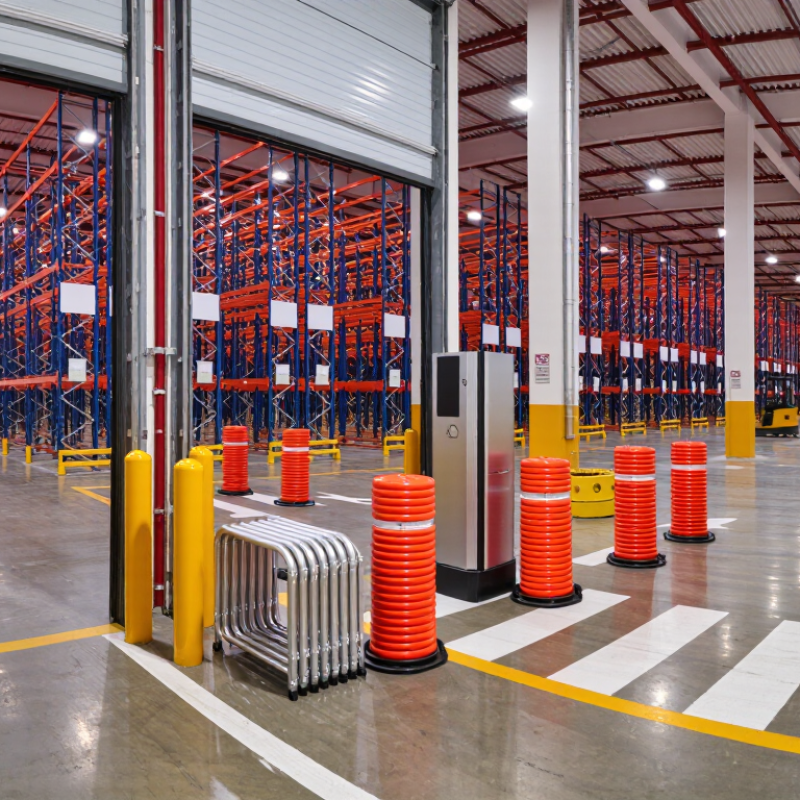
Warehouse bollards are short, sturdy posts that protect people, equipment, and building structures from moving vehicles. They are commonly made from steel, concrete, or impact-resistant materials. Their bright finishes improve visibility near aisles, loading docks, doors, and storage racks.
In practical warehouse assessments, bollards often prevent small forklift errors from becoming expensive damage. A properly positioned post can shield rack corners, electrical panels, wall edges, and pedestrian routes. Small impacts still matter. They can loosen anchors or weaken nearby surfaces over time. Bollards also create a visible boundary, helping drivers judge safe turning space. That simple visual signal supports safer daily movement.
Installation should follow the expected impact level and floor conditions. Posts need suitable spacing, strong anchors, and enough clearance for vehicles and workers. A weak anchor can make a strong bollard ineffective. Visibility matters too. High-contrast colors, reflective bands, and adequate lighting help during busy shifts. However, a bollard is not a complete safety plan. During inspections, check for dents, cracked concrete, loose fixings, and blocked walkways. I have seen damaged posts remain in place because they still looked acceptable from a distance. That mistake deserves attention. Protection should match each hazard. Flexible barriers may suit pedestrian areas, while rigid steel posts may better protect structural columns and machinery. Review impact marks regularly, replace damaged components, and adjust layouts when traffic patterns change.

2026 Best Warehouse Bollards for Warehouse Safety?
How to Assess Warehouse Bollard Protection Needs
Warehouse bollard selection should begin with a site walk, not a product catalogue. Mark forklift routes, loading doors, rack ends, battery-charging areas, and pedestrian crossings. OSHA estimates that forklifts cause about 35,000 serious injuries and 62,000 non-serious injuries annually in the United States. That figure makes impact protection a risk-control decision, not merely a facility upgrade.
Record vehicle type, travel speed, turning space, and the heaviest likely load. A small pallet truck needs different protection from a counterbalance forklift. Measure the clear distance between traffic and vulnerable assets. Consider repeated low-speed impacts, because minor strikes can loosen anchors and weaken concrete. Bollards should protect the hazard without creating a new trip or visibility problem. Yellow paint helps, but it cannot replace good placement.
Use impact-rated steel barriers near rack uprights, doors, columns, and control panels. Choose height and spacing that block forks, not just bumpers. OSHA’s powered industrial truck guidance also stresses safe travel, visibility, and pedestrian separation. FM Global property-loss research consistently links physical protection and maintenance with reduced damage severity, although bollards alone cannot control poor driving. That is the uncomfortable part. A well-installed barrier may still fail when inspections are skipped. Review damage logs monthly, photograph bent posts, and check anchor movement. I would also reassess after every layout change, because yesterday’s safe route can become tomorrow’s blind corner.
Warehouse safety depends on choosing the right bollard for each risk, not using one design everywhere. Fixed steel bollards protect racking, dock doors, columns, and pedestrian routes from forklifts. Their welded or concrete-filled construction suits areas with repeated impact exposure. High-visibility coatings help operators notice them in dim aisles.
Removable bollards work well where pallet movement or maintenance access changes throughout the day. Fold-down models can protect equipment while allowing occasional vehicle passage.
Retractable bollards provide controlled access at doors and loading zones. Flexible polymer bollards reduce minor collision damage, although they may not stop a heavy forklift. Impact-rated systems offer stronger protection, but their tested performance must match the expected vehicle speed and weight.
Placement matters as much as material. Leave enough clearance for turning pallets, while preventing a forklift from reaching a vulnerable rack post. Anchors must suit the concrete slab, and damaged bases require quick inspection.
During site reviews, I check scuff marks, loose bolts, faded markings, and blocked sightlines. Small defects often reveal larger traffic problems. No layout stays perfect. New racks, temporary storage, or rushed deliveries can create blind spots.
A practical warehouse plan should combine bollards with guardrails, floor markings, lighting, and regular operator feedback.
2026 Best Warehouse Bollards for Warehouse Safety?
Choosing warehouse bollards starts with the hazard, not the product photograph. OSHA reports that forklift incidents cause about 35,000 serious injuries annually. The U.S. Bureau of Labor Statistics recorded 1,495 fatal injuries in transportation and material-moving occupations in 2023. These figures cover wider workplaces, but they show the exposure clearly.
Start with the material. Steel suits forklift lanes, dock edges, and rack corners where repeated impacts may occur. Stainless steel works better in washdown or corrosive areas. Flexible polymer bollards can absorb minor contact and reduce vehicle damage, but they may not protect structural columns. Concrete provides mass, though replacement becomes difficult after a strike. Not every barrier needs steel.
Design affects real performance. Choose a height visible above pallets, a rounded profile near pedestrian routes, and a base that does not create a trip hazard. Anchor spacing, slab thickness, and installation depth deserve careful review. The Rack Manufacturers Institute’s current rack guidance supports evaluating rack protection as part of the storage system, not as an isolated accessory.
Impact ratings need careful interpretation. Ask for the tested vehicle weight, speed, impact angle, energy, and permanent deformation. ASTM F3016 testing can help compare low-speed vehicle barrier performance where its scope applies. A label saying “heavy duty” proves little. In practice, bollards often fail because anchors loosen or vehicles approach diagonally. That detail matters. A site survey should measure traffic paths, turning radius, pallet height, and damaged locations. The honest answer is less tidy: a high rating cannot correct poor placement.
| Warehouse Application | Recommended Material | Design Type | Typical Dimensions | Impact Rating Guidance | Protection Strength | Finish and Visibility | Installation Method | Best Selection Criteria |
|---|---|---|---|---|---|---|---|---|
| Pedestrian doors and personnel entrances | Carbon steel pipe or structural steel | Fixed, round steel bollard with a flat or domed cap | Typically 100–168 mm outside diameter; approximately 900–1,200 mm above finished floor | Non-rated unless tested | High resistance to impacts from pallet trucks and light industrial vehicles when correctly anchored | High-visibility yellow powder coating with contrasting reflective bands | Core-drilled or surface-mounted with engineered anchors | Prioritize clear pedestrian separation, adequate embedment, and visibility from forklift operating zones |
| Rack-end protection | Heavy-gauge carbon steel | U-shaped, L-shaped, or multi-leg rack guard | Commonly 100–150 mm diameter or formed steel sections; height generally 300–600 mm | Application-specific | Designed to absorb or redirect low- to medium-speed forklift contact at rack corners | Powder-coated yellow; black-and-yellow hazard markings may improve recognition | Bolted to the floor, rack frame, or both, according to the rack-protection design | Check aisle width, rack-leg geometry, anchor spacing, and compatibility with the rack manufacturer’s layout |
| Loading docks and dock edges | Heavy-wall carbon steel or reinforced structural steel | Fixed steel posts, dock bumpers, or corner guards | Often 150–200 mm diameter or equivalent structural section; height selected for vehicle and dock geometry | Engineered for vehicle contact | Very high when supported by a reinforced concrete foundation and positioned to protect dock equipment | Industrial powder coating or galvanized finish; reflective tape recommended in low light | Deep-set or base-plated installation with structural anchorage | Consider trailer swing paths, dock levelers, restraints, bumpers, and the condition of the concrete slab |
| Forklift charging stations | Carbon steel; stainless steel where corrosive cleaning chemicals are present | Fixed or removable bollard with a protective sleeve | Typically 100–168 mm diameter; approximately 900–1,200 mm high | Non-rated unless tested | High protection against accidental forklift and pallet impacts around charging equipment | Yellow powder coat; use chemical-resistant coating where battery-acid exposure is possible | Surface-mounted or core-drilled, with clearance maintained for charging access | Protect chargers, cables, ventilation equipment, and emergency access without creating trip hazards |
| Fire equipment, sprinkler risers, and utilities | Carbon steel or stainless steel | Fixed single post, double post, or horseshoe-shaped guard | Typically 100–168 mm diameter; height selected to shield the vulnerable equipment | Non-rated unless tested | Suitable for routine material-handling impacts when properly located and anchored | High-visibility yellow; reflective markings are useful in aisles and emergency routes | Surface-mounted or embedded in concrete, subject to local access requirements | Maintain required access, signage visibility, inspection clearance, and fire-code separation distances |
| High-traffic forklift aisles | Heavy-wall steel or engineered impact-resistant polymer with steel reinforcement | Fixed steel bollard, flexible rebound bollard, or modular barrier system | Steel posts commonly 100–200 mm diameter; height and spacing depend on traffic flow | Select by tested energy capacity | Steel provides high structural resistance; flexible systems can reduce vehicle and floor damage in repeated low-speed contacts | Yellow, orange, or safety-green finish; reflective bands improve detection | Anchored to concrete or installed as a modular barrier line | Match the system to forklift mass, speed, turning radius, traffic frequency, and required deflection |
| Temporary work zones and maintenance areas | Recycled polymer, high-density polyethylene, or water-filled plastic | Portable, linked, or weighted flexible bollard | Commonly 100–150 mm diameter; approximately 900–1,200 mm high | Low-energy, non-rated | Useful for visual separation and low-speed contact; not a substitute for a tested vehicle barrier | Bright yellow, orange, or red with reflective bands | Freestanding, weighted, or connected to adjacent units | Choose portability and visibility when the hazard location changes frequently |
| Vehicle entrances and security-sensitive areas | Reinforced structural steel or certified crash-rated steel system | Fixed anti-ram bollard, removable bollard, or automatic rising bollard | Dimensions and foundation depth must follow the tested system design | Tested crash rating required | High to very high, depending on the tested vehicle type, impact speed, penetration distance, and installation design | Powder-coated or galvanized steel; add reflective bands and lighting where appropriate | Engineered reinforced foundation installed according to the test documentation | Use independently verified crash-test data and confirm that the foundation, soil, gate, and surrounding structure meet the system requirements |
| Cold-storage and washdown environments | Hot-dip galvanized steel or stainless steel | Fixed round bollard with sealed cap and corrosion-resistant base details | Typically 100–168 mm diameter; height selected for the equipment and traffic pattern | Non-rated unless tested | High resistance to routine impacts when protected against corrosion and installed in sound concrete | Galvanized finish or powder coating compatible with temperature and cleaning chemicals | Core-drilled, cast-in, or surface-mounted with corrosion-resistant anchors | Evaluate corrosion, freeze-thaw exposure, drainage, sanitation procedures, and floor-slab condition |
| Selection note: Dimensions and impact performance are indicative ranges for warehouse planning, not a certification. A bollard’s actual capacity depends on steel grade, wall thickness, anchor design, embedment depth, concrete strength, impact angle, vehicle mass, and speed. For vehicle-security applications, select a system with documented independent crash testing and have the foundation and layout reviewed by a qualified engineer. | ||||||||
Warehouse bollard safety begins with the right installation plan. Choose steel or reinforced polymer bollards according to impact risks, traffic speed, and exposure. A forklift route needs stronger protection than a pedestrian aisle. Check the slab thickness, concrete strength, and anchor spacing before drilling. Poorly set anchors can fail during the first serious collision. That mistake is avoidable.
Place bollards beside rack uprights, dock edges, doors, columns, and vulnerable equipment. Keep required walking and emergency access clear. Use high-visibility finishes, reflective bands, or contrasting colors near dim loading areas. Measure turning paths with a loaded forklift, not an empty one. This small detail often reveals dangerous corner cuts. Maintain safe clearance around fire equipment and electrical panels, following applicable local requirements.
Maintenance should be scheduled, recorded, and practical. Inspect bollards monthly for bending, cracked welds, loose anchors, rust, and damaged coatings. After any impact, isolate the area and arrange a documented inspection. Do not straighten a deformed bollard and return it to service without technical review. Replace missing hardware promptly. Clean reflective markings before they become dull. Review placement after layout changes, new vehicles, or increased pallet storage. Warehouse teams know the real traffic problems, yet their feedback is sometimes ignored. That is a weakness in many safety plans. A qualified engineer should verify structural capacity, anchoring details, and compliance with current site regulations.