How to Choose the Right Cell Rubber Fender in 2026?
Choosing the right Cell Rubber Fender in 2026 requires more than comparing catalog prices. It demands a careful match between vessel size, berthing energy, quay structure, and operating conditions. A fender that performs well at a sheltered terminal may fail under repeated impact, strong currents, or angled berthing. The details matter.
Engineers should review the vessel’s displacement, approach velocity, berthing angle, and available panel area. They should also examine rubber grade, reaction force, energy absorption, shear performance, and compression limits. Installation hardware deserves equal attention. Poorly aligned chains, undersized bolts, or an uneven support surface can reduce service life quickly. On site, salt spray, ultraviolet exposure, temperature changes, and debris may influence performance. These factors are easy to overlook.
Experience remains valuable, but it should support measured evidence. Request verified test data, dimensional drawings, material information, and practical references from comparable ports. Independent inspection can reveal cracking, permanent deformation, or mounting stress before a small issue becomes expensive. However, no selection guide can replace a project-specific engineering assessment. Conditions vary, and published performance figures may depend on testing methods. That uncertainty deserves honest consideration. A lower purchase price may look attractive, yet replacement work, vessel damage, and downtime can cost far more. The best Cell Rubber Fender is not simply the largest or cheapest option. It is the one that delivers suitable energy absorption, predictable reaction force, safe installation, and maintainable performance throughout its intended service life. Small assumptions can create large consequences.
Understanding Cell Rubber Fender Design and Protection Principles
How to Choose the Right Cell Rubber Fender in 2026?
Understanding Cell Rubber Fender Design and Protection Principles
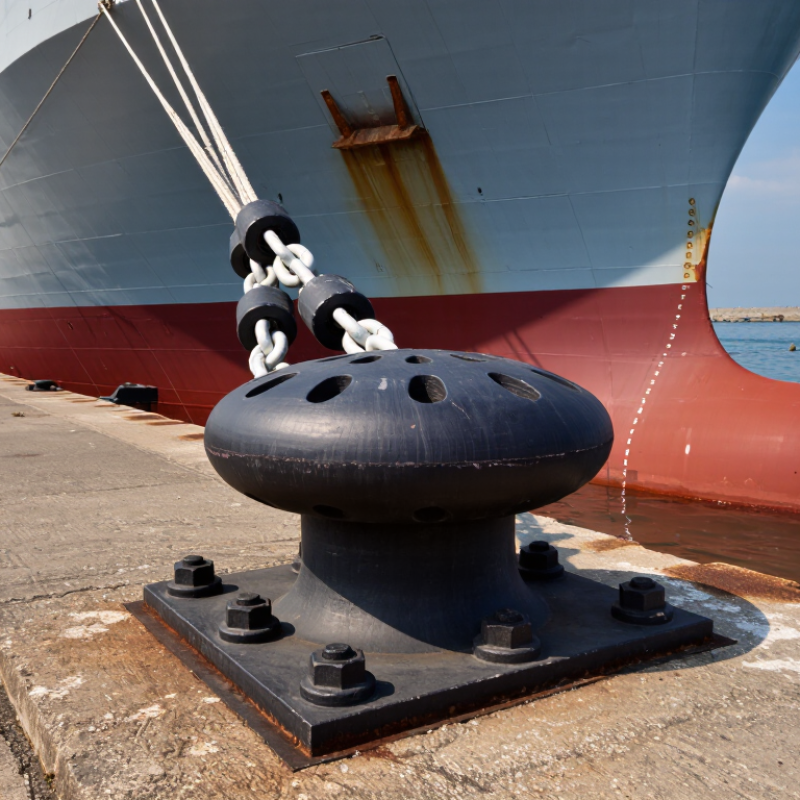
A cell rubber fender uses a hollow, cylindrical body to absorb berthing energy. Its circular shape compresses vertically and expands sideways under vessel impact. This movement protects both the hull and the quay structure. The design must match vessel displacement, approach velocity, berthing angle, and available clearance. A small sizing error can create excessive reaction force.
Check the compression-energy curve, not only the stated energy rating. Reliable engineering data should include allowable deflection, reaction force, dimensional tolerances, and temperature performance. The rubber compound must resist seawater, ozone, sunlight, and repeated loading. Flanges, bolts, chains, and sliding panels also need compatible strength. The fender is a system. It is not just a rubber cylinder.
On site, measure the berth face and inspect the concrete before installation. Uneven surfaces can concentrate pressure around the flange. Poor bolt alignment may cause tearing during early impacts. I have seen clean calculations fail because tidal movement and vessel trim were overlooked. That detail deserves more attention. Use recognized marine engineering guidance and request independent test records where risk is high. Review the design after installation, especially when cracks, permanent deformation, or unusual noise appears. Some assumptions will be wrong. Regular inspection helps reveal them before protection becomes a problem.
Assessing Berthing Conditions and Required Fender Performance
How to Choose the Right Cell Rubber Fender in 2026?
Selecting a cell rubber fender begins at the waterline, not with catalogue energy figures. Record vessel displacement, approach velocity, berthing angle, tide range, current, wind, and contact geometry. PIANC Report WG33 identifies these variables as core inputs for berthing-energy assessment. A field survey should include scars, panel marks, and mooring records. Small details matter. A vessel arriving at 0.15 m/s behaves differently from one arriving at 0.25 m/s; kinetic energy changes with velocity squared.
Then match required performance, not just nominal size. Calculate normal and abnormal berthing energy, then check reaction force, deflection, shear resistance, hull pressure, and panel friction. BS 6349-4:2014+A1:2019 and PIANC guidance support checking both operational and accidental cases. UNCTAD’s Review of Maritime Transport 2024 recorded a 3.4% increase in global fleet capacity during 2023. That growth does not automatically justify a larger fender.
Cell fenders also need verification under temperature changes, aging, and manufacturing tolerance. Request test curves, compression-set data, and inspection intervals. ISO 17357-1:2014 defines physical-property and testing requirements for high-performance marine rubber fenders. A neat calculation can still be wrong when approach speed was guessed. We should admit that. I would rerun the model when berth usage changes, although this step is often skipped. Real sites are untidy.
How to Choose the Right Cell Rubber Fender in 2026?
Assessing Berthing Conditions and Required Fender Performance
This screening chart compares typical energy absorption and reaction-force requirements for sheltered, coastal, and exposed berthing conditions. Actual cell rubber fender selection should be verified using vessel displacement, berthing velocity, effective impact energy, approach angle, tide range, temperature, fender spacing, and allowable hull or quay reaction loads. The values shown are engineering reference ranges and are not a substitute for project-specific calculations.
Comparing Cell Rubber Fender Sizes, Shapes, and Energy Ratings
How to Choose the Right Cell Rubber Fender in 2026?
Cell rubber fenders differ mainly in diameter, height, shape, and energy rating. Diameter controls the contact area and affects how load spreads across the hull. Height influences compression distance and the space needed behind the fender. A larger fender is not automatically better. It may create excessive reaction force during berthing.
Compare the energy rating at the specified deflection, not as an isolated catalogue number. A typical rating may assume 50% compression, while your project may allow less. Check reaction force, allowable deflection, temperature range, and the supporting panel’s strength. Circular cell shapes suit many quay walls, but the mounting layout and vessel flare can change the best choice. Measure the vessel’s landing zone carefully. Small errors become expensive offshore.
Tips:
Match fender size with vessel approach speed, berthing angle, tide variation, and operating frequency. Ask for test data, dimensional tolerances, and ageing information. Inspect the rubber surface for cracks, cuts, bulges, or permanent deformation. A neat spreadsheet can still mislead. Field conditions are rarely perfect. Saltwater, uneven steelwork, and poor alignment may reduce real performance. Leave practical clearance around bolts and chains, then verify the design with a qualified marine engineer. The energy rating should protect both the vessel and the berth, not merely satisfy a drawing.
Selecting Materials, Accessories, and Installation Configurations
How to Choose the Right Cell Rubber Fender in 2026?
Selecting the right cell rubber fender starts with the operating environment. Check vessel size, berthing speed, tide range, temperature, and expected impact frequency. A suitable rubber compound must resist seawater, ozone, sunlight, and repeated compression. Hardness also matters. Softer rubber absorbs energy gently, while harder rubber may provide greater reaction force. The wrong balance can damage both the fender and the quay structure.
Material records should include test data, dimensional tolerances, and rated energy performance. Ask for evidence from controlled inspections, not only attractive catalog figures. A perfect selection is rare. Real berths often have uneven surfaces and changing loads. That assumption can fail. Engineering review should compare the fender’s energy capacity with the design vessel and applicable maritime standards.
Accessories complete the system. Frontal pads can reduce hull pressure, while sliding surfaces may use low-friction polymer plates. Chains, brackets, washers, and anchors need compatible corrosion protection. Installation crews should verify bolt grades, hole positions, and support-structure strength before lifting the fender. The cell must sit squarely against the panel, without twisting or hidden gaps. Measure compression after installation, then record clearances at low and high tide. Small alignment errors become expensive during frequent berthing. Regular inspections should check cracks, permanent deformation, loose hardware, and abnormal wear. Field notes matter.
Planning Inspection, Maintenance, and Replacement for 2026
How to Choose the Right Cell Rubber Fender in 2026?
Planning Inspection, Maintenance, and Replacement for 2026
Berth traffic is not slowing down. UNCTAD’s Review of Maritime Transport 2024 recorded 12.3 billion tonnes of seaborne trade in 2023, a 2.4% annual increase. More vessel movements can mean more repeated compression, especially at busy terminals. In 2026, select a cell rubber fender from verified berthing energy, vessel approach speed, tide range, and panel pressure. Do not rely on the old drawing alone. Actual operating conditions may have changed.
Build the inspection plan around evidence. PIANC MarCom Working Group 211 recommends evaluating fender performance, installation, materials, and service conditions together. During each inspection, photograph cracks, bulging, local crushing, loose bolts, damaged chains, and panel wear. Measure visible deformation where possible. Record berth number, vessel type, temperature, and impact location. Small details matter. A clean spreadsheet can still hide a growing problem.
Maintenance should include bolt torque checks, chain adjustment, panel alignment, and underwater inspection when abrasion is suspected. Compare field observations with the original energy and reaction-force curves. If permanent deformation increases, rubber hardens, or performance falls outside the design requirement, plan replacement before failure. Our first schedule may look precise, but fixed calendar intervals can miss accelerated wear. Review the plan after unusual impacts, berth modifications, or heavier vessel calls. ISO 17357-1 and current PIANC guidance should support the inspection records and engineering decision.